Our Three Step Process
May 13, 2026
Klaviyo vs Mailchimp for Ecommerce: The 2026 Comparison
Our Three Step Process
May 13, 2026
Klaviyo vs Mailchimp for Ecommerce: The 2026 Comparison
Klaviyo vs Mailchimp for ecommerce in 2026. Comparing features, pricing, automation, and which platform drives more revenue for online stores.
Choosing the right email marketing tool can really make or break your business's outreach efforts. You've probably heard of both Klaviyo and Mailchimp, and maybe you're wondering which one is the better fit for you in 2026. They both send emails, sure, but they're actually built for pretty different things. This guide is going to break down the Klaviyo vs Mailchimp debate, looking at features, costs, and who each platform is best for, so you can stop guessing and start growing.
Key Takeaways
Klaviyo is the go-to for e-commerce businesses, especially those on platforms like Shopify or WooCommerce, because it's built to track sales and customer behavior deeply.
Mailchimp is more of a generalist, great for small businesses or those who need a simple tool for basic email campaigns and a few other marketing tasks.
When it comes to automation, Klaviyo offers more advanced options tailored for e-commerce, like abandoned cart sequences, while Mailchimp's are more basic.
Pricing can be tricky; Mailchimp might seem cheaper at first but can get expensive with add-ons, whereas Klaviyo's cost is more directly tied to its powerful e-commerce features.
Your business model and how much you rely on email for revenue should be the biggest factors when deciding between Klaviyo vs Mailchimp.
Understanding The Core Differences: Klaviyo vs Mailchimp
When you're trying to figure out which email marketing tool is the right fit for your business in 2026, it's easy to get lost in all the features. But at its heart, the choice between Klaviyo and Mailchimp comes down to what kind of business you're running and what you need that platform to do.
Who Each Platform Is Designed For
Think of it this way: Klaviyo was built from the ground up with online stores in mind. If you're selling products through platforms like Shopify, WooCommerce, or BigCommerce, Klaviyo connects directly to your store. It pulls in all sorts of customer data â what they've bought, what they've looked at, even what's sitting in their cart. This makes it super powerful for sending really specific messages to your customers. For example, a Shopify store owner can easily set up emails for people who leave items in their cart or a welcome series for new subscribers.
Mailchimp, on the other hand, started out as a simpler email tool and has grown into something more general. It's good for all sorts of small businesses, not just online stores. If you're a freelancer, a service provider, or a blogger, Mailchimp offers tools for landing pages, social media posts, and even a basic website builder. It's often seen as a good starting point for businesses that need a bit of everything without a complicated setup.
Key Differentiators at a Glance
Here's a quick look at how they stack up:
Klaviyo: Primarily for e-commerce, advanced automation, deep customer data integration, strong revenue tracking.
Mailchimp: General marketing, easier for beginners, broader features beyond email (landing pages, social), good for diverse business types.
The main difference boils down to focus. Klaviyo is laser-focused on helping online stores make more money through email and SMS. Mailchimp aims to be a one-stop shop for a wider range of marketing tasks, which can be great if you're not solely reliant on e-commerce sales.
Evolution of Email Marketing Tools
Email marketing tools have changed a lot. They've gone from just sending out newsletters to becoming sophisticated platforms that can predict customer behavior and automate complex customer journeys. Both Klaviyo and Mailchimp have evolved, but they've taken different paths. Klaviyo has doubled down on e-commerce data and automation, making it a go-to for online retailers looking to maximize sales. Mailchimp has broadened its scope, trying to be a solution for many different marketing needs, which can sometimes mean it's not as specialized for e-commerce as Klaviyo. This comparison delves into Klaviyo versus Mailchimp, examining their features and how they stack up for businesses in 2026. This guide breaks down everything you need to know.
Feature Deep Dive: Automation And Segmentation
When you're trying to get your marketing to actually do something, automation and segmentation are your best friends. They're how you stop sending the same generic message to everyone and start talking to people like you actually know them. Both Klaviyo and Mailchimp have tools for this, but they go about it a bit differently.
Advanced Automation Capabilities
Think of automation as setting up little email robots that do tasks for you. Klaviyo calls these "flows." They're triggered by customer actions, like signing up for your newsletter or leaving items in their cart. You can build pretty complex sequences with these flows, including things like welcome series, abandoned cart reminders, and post-purchase follow-ups. What's neat is that these flows can change based on what the customer does next. If someone buys something after getting an abandoned cart email, the flow can stop. Mailchimp also has automation, which they call "Marketing Automation Flows." On their basic plans, you're limited to pretty simple, one-step automations. To get to the more complex, multi-step workflows that can really make a difference, you'll need to upgrade.
Building out sophisticated automation sequences can feel like a puzzle, but when it clicks, it saves you so much time and makes your emails feel way more relevant to the person getting them.
Klaviyo's automation is generally seen as more robust, especially for e-commerce. They have a lot of pre-built flows specifically for online stores that you can use right away. Mailchimp offers some pre-built journeys too, like welcome series and cart abandonment, but they often require more tweaking to work well for a specific business.
Segmentation Power and Flexibility
Segmentation is all about dividing your audience into smaller groups so you can send them more targeted messages. Klaviyo really shines here. You can create segments based on all sorts of data, like purchase history, how much they've spent, or even what they've looked at on your site. These segments update automatically, so you're always talking to the right people. This means you can easily target, say, customers who bought a specific product but haven't bought a related item yet. Mailchimp also lets you segment your audience, using tags, groups, and filters. You can segment based on contact details, engagement with past emails, and even how they signed up. However, on their free plan, you're limited to just five filters, and you'll need a premium plan for unlimited ones. Klaviyo's ability to create dynamic segments that automatically adjust based on contact criteria is a significant advantage [e809].
Personalization and Dynamic Content Options
Once you've got your segments, you want to make sure the emails feel personal. Both platforms allow for personalization using merge tags (like *|FNAME|* in Mailchimp or *|FIRST_NAME|* in Klaviyo) to insert a contact's name. But it goes deeper. Klaviyo allows for dynamic content blocks within emails. This means you can have one email template, but different parts of the email can change based on who is receiving it. For example, you could show different product recommendations to different segments within the same email campaign. Mailchimp also supports dynamic content, allowing you to tailor content based on contact properties or group membership. However, Klaviyo's deep integration with e-commerce data often makes its dynamic content feel more powerful and relevant for online stores, especially when it comes to product recommendations.
Here's a quick look at how they stack up:
Feature | Klaviyo | Mailchimp |
|---|---|---|
Automation Complexity | High (advanced flows, conditional splits) | Medium (basic on lower plans, advanced on higher) |
Segmentation Basis | Purchase history, browsing behavior, predictive analytics | Contact details, email engagement, basic purchase data |
Dynamic Content | Robust, e-commerce focused | Good, adaptable |
Real-time Updates | Yes, for segments and flows | Varies by plan and feature |
When you're looking at which platform to use, think about how much you need your emails to do on autopilot and how specific you need to get with your audience targeting. For businesses that are heavily e-commerce focused, Klaviyo's advanced features in automation and segmentation often give it an edge [5bb0].
E-commerce Focus: Where Klaviyo Shines
When you're running an online store, especially one that's growing, you need tools that understand the unique rhythm of e-commerce. That's where Klaviyo really steps up. It was built from the ground up with online businesses in mind, and you can tell. Mailchimp is a great general tool, but Klaviyo feels like it speaks the language of Shopify, WooCommerce, and other e-commerce platforms fluently.
Native E-commerce Integrations
This is a big one. Klaviyo connects directly with most major e-commerce platforms. Think Shopify, BigCommerce, WooCommerce, and Magento. It doesn't just connect; it pulls in a ton of data in real-time. This means your customer lists, order history, and browsing behavior are always up-to-date. For Shopify users, the integration is particularly tight, syncing data instantly so your automated emails and segments are always working with the latest info. Mailchimp has integrations too, but they often don't go as deep, meaning you might miss out on detailed customer behavior data that Klaviyo captures easily.
Revenue Attribution and Tracking
Ever wonder exactly how much money an email campaign brought in? Klaviyo makes this super clear. It shows you the revenue generated by each email, each automated flow, and even individual messages. This kind of direct tracking is pretty much built-in. With Mailchimp, you often have to connect other tools and do some manual math to get a similar picture.
Klaviyo's ability to directly link marketing efforts to sales figures is a game-changer for online stores. It removes a lot of the guesswork and helps you see what's actually working to drive revenue.
Here's a quick look at what that difference can mean:
Feature | Klaviyo Example | Mailchimp Example |
|---|---|---|
Campaign Revenue | $4,250 revenue, 3.2:1 ROI | 85 clicks, "requires integration for conversion tracking" |
Welcome Flow Revenue | $12,340 monthly revenue, 18.5:1 ROI | Generic template, needs heavy customization |
Tailored Workflows for Online Stores
Klaviyo comes with a bunch of pre-built automation flows specifically for e-commerce. We're talking about things like:
Welcome Series: Greeting new subscribers and introducing your brand.
Abandoned Cart Flows: Reminding shoppers about items left behind.
Post-Purchase Flows: Thanking customers, asking for reviews, and suggesting related items.
Win-Back Campaigns: Re-engaging customers who haven't shopped in a while.
These flows are designed to work right out of the box. Mailchimp has automation templates, but they're usually more generic and require a lot more effort to adapt for specific e-commerce needs. This means you can get sophisticated marketing campaigns running much faster with Klaviyo, helping you recover lost sales and build customer loyalty without needing to be a tech wizard. If you're serious about growing your online store, Klaviyo's e-commerce specific features are hard to beat. It's why so many brands eventually migrate to Klaviyo after starting with more general tools.
Broader Marketing Needs: Mailchimp's Appeal
Mailchimp started out as a pretty straightforward tool for sending out email newsletters. Over the years, it's grown into something much bigger, trying to be a one-stop shop for a lot of different marketing tasks. If you're running a small business, maybe a local shop or a service provider, and you don't have a huge e-commerce operation, Mailchimp can feel like a good fit. It's often seen as the easier option to get started with, especially if you're not super tech-savvy.
General Purpose Marketing Features
Mailchimp has expanded beyond just email. You can create landing pages, post on social media, and even build a basic website right within the platform. This all-in-one approach is appealing if you want to keep things simple and manage different marketing activities from a single dashboard. It's designed to be accessible, so you don't need to be a marketing guru to figure it out. For many businesses, this broad functionality means they don't have to juggle multiple subscriptions for basic marketing tasks.
Ease of Use for Beginners
When you first log into Mailchimp, it generally feels less intimidating than some other platforms. The interface is usually pretty clean, and they have a drag-and-drop email builder that makes creating visually appealing emails straightforward. They also offer a bunch of templates that are good for various things, not just selling products online. Think event invitations, simple announcements, or just a regular newsletter. This makes it a popular choice for folks just starting out with email marketing or those who don't have a lot of time to learn complex software. It's a tool that lets you get campaigns out the door without a massive learning curve.
Versatility Across Business Types
Because Mailchimp isn't tied specifically to e-commerce, it works for a wider range of businesses. If you're a consultant, a non-profit, a freelancer, or a brick-and-mortar store that just wants to keep customers informed, Mailchimp can handle that. It's built to be flexible. You can manage your contacts, send out updates, and track basic engagement without needing to connect a complex online store. This makes it a solid option for businesses where email is more about communication and less about direct online sales. It's good to know that a significant percentage of consumers are still opting into email communications, no matter the business type.
Mailchimp's strength lies in its broad appeal and user-friendly design, making it a go-to for businesses that need a straightforward way to manage general marketing communications without getting bogged down in e-commerce specifics.
Pricing Structures And Scalability
When you're looking at email marketing platforms, the price tag is obviously a big deal. It's not just about the monthly fee, though; you've got to think about what you're actually getting for your money and how that cost will change as your business grows. Both Klaviyo and Mailchimp have different ways of charging, and understanding these differences can save you a lot of headaches down the road.
Comparing Cost at Different Tiers
Mailchimp tends to have a more tiered approach. You pick a plan, and that plan dictates which features you can use. For example, their free plan is pretty basic, good for just getting started with newsletters. As you move up to Essentials, Standard, and then Premium, you unlock more advanced features like multi-step automations and better segmentation. The catch? Mailchimp's most powerful segmentation tools, which are really useful for e-commerce, are locked behind their Premium plan, which starts at a pretty hefty $350 a month for 10,000 contacts. This can put some of their best capabilities out of reach for many smaller businesses.
Klaviyo, on the other hand, has a different philosophy. Their pricing is based on the number of active profiles you have in your account. As of 2025, they updated their model to charge based on your total active profile count, not just who you're actively sending emails to. The cool thing here is that all paid plans include every feature. So, whether you're on a basic plan or a more advanced one, you get access to their advanced segmentation, predictive analytics, and A/B testing tools right away. There are no feature gates between tiers. This means your access to the platform's tools stays the same as your list grows, which is a big plus if you want to use all the bells and whistles from day one. While Klaviyo's pricing can become noticeably higher as your list grows compared to Mailchimp at smaller list sizes, the upfront access to all features is a significant advantage for businesses that plan to use them.
Here's a quick look at how they stack up at the entry-level paid tiers:
Feature | Klaviyo (Email Plan) | Mailchimp (Essentials) |
|---|---|---|
Starting Price (approx.) | $20/mo | $13/mo |
Contact Limit (starting) | 251-500 profiles | 500 contacts |
Included Features | All features | Basic features, 24/7 support |
Understanding Hidden Fees and Add-ons
One thing to really watch out for with Mailchimp is how they count contacts. They charge for contacts who have unsubscribed but are still in your account. If you're not diligent about cleaning your list, your bill can creep up unexpectedly. It's a detail that can catch people off guard. Klaviyo's model, while potentially more expensive as your list grows, is generally more straightforward in what it bills you for â active profiles.
While Mailchimp might seem cheaper initially, especially for smaller lists, the cost can escalate quickly as your needs become more sophisticated. Features that are standard in Klaviyo often require upgrading to Mailchimp's highest tiers or paying for add-ons, making the total cost of ownership higher than it first appears. This is a key point to consider when evaluating app ecosystems.
Value Proposition for Growing Businesses
For businesses that are serious about e-commerce and want to use advanced marketing tactics, Klaviyo's value proposition is strong. You pay for access to a powerful suite of tools that are built specifically for online stores. This means you get robust revenue attribution, deep segmentation based on purchase history, and sophisticated automation flows right out of the box. While the cost might be higher as your list expands, the ability to drive revenue through these advanced features often justifies the investment. It's about paying for capabilities that directly impact your bottom line.
Mailchimp's value is more in its general-purpose appeal and ease of use for beginners. If your primary need is sending out a regular newsletter and you don't require complex e-commerce specific automations or deep data analysis, Mailchimp can be a cost-effective solution. However, as your business scales and your marketing needs become more advanced, you might find yourself hitting feature limitations or facing significant cost increases to access the tools you need. This is why many growing e-commerce brands eventually migrate between platforms.
Ultimately, the best choice depends on your specific business model and how you plan to use the platform. If you're a data-driven e-commerce business looking to maximize revenue through personalization and automation, Klaviyo's pricing structure, while potentially higher at scale, offers better long-term value. If you're a small business with simpler needs or operate outside of e-commerce, Mailchimp might be a more budget-friendly starting point.
Integrations And Technical Considerations
Evaluating App Ecosystems
When you're picking an email marketing tool, it's not just about what it does on its own. You've got to think about how it plays with all the other software you already use. Both Klaviyo and Mailchimp have pretty big app stores, but they lean in different directions. Klaviyo really focuses on connecting with e-commerce platforms and related tools. Think Shopify, WooCommerce, and things like loyalty programs or review apps. They pull in a lot of detailed customer data from these places. Mailchimp, on the other hand, has a wider net, connecting with all sorts of business tools, from website builders like Wix to social media platforms and CRMs. It's about finding the one that talks to your specific tools.
Connecting Your Existing Tech Stack
So, what does this mean for your business? If you're running an online store, especially on platforms like Shopify, Klaviyo's direct connections are a big deal. It means data flows more smoothly, and you can set up more targeted campaigns based on what people are actually buying or browsing. Mailchimp can connect too, but sometimes it needs a bit more work to get the same level of detail. The key is to list out all the software your business relies on and then check which platform offers the best, most direct integration.
Here's a quick look at what some common integrations look like:
E-commerce Platforms:
Klaviyo: Shopify, WooCommerce, BigCommerce (deep data sync)
Mailchimp: Shopify, WooCommerce, Wix, Squarespace (broader, less depth)
CRM & Sales:
Klaviyo: HubSpot, Salesforce (via third-party)
Mailchimp: HubSpot, Salesforce, Zoho CRM
Analytics:
Klaviyo: Google Analytics, Triple Whale
Mailchimp: Google Analytics
Setting up integrations can sometimes feel like a puzzle. You want everything to fit together perfectly so your data is accurate and your marketing efforts are well-informed. Don't underestimate the time it might take to get these connections just right.
Leveraging Zapier for Custom Needs
What if your essential tool isn't on either platform's direct integration list? That's where tools like Zapier come in. Both Klaviyo and Mailchimp play nicely with Zapier. This means you can create custom connections between almost any two apps. For example, maybe you use a specific project management tool and want to trigger an email when a task is completed. Zapier can help make that happen, bridging the gap and letting you build workflows that are unique to your business. It's a good safety net if you have a niche tech stack or a very specific automation in mind. It's worth noting that while both platforms offer easy self-service onboarding, some other tools might need more technical help to get set up [b37c].
Analytics, Reporting, And Performance
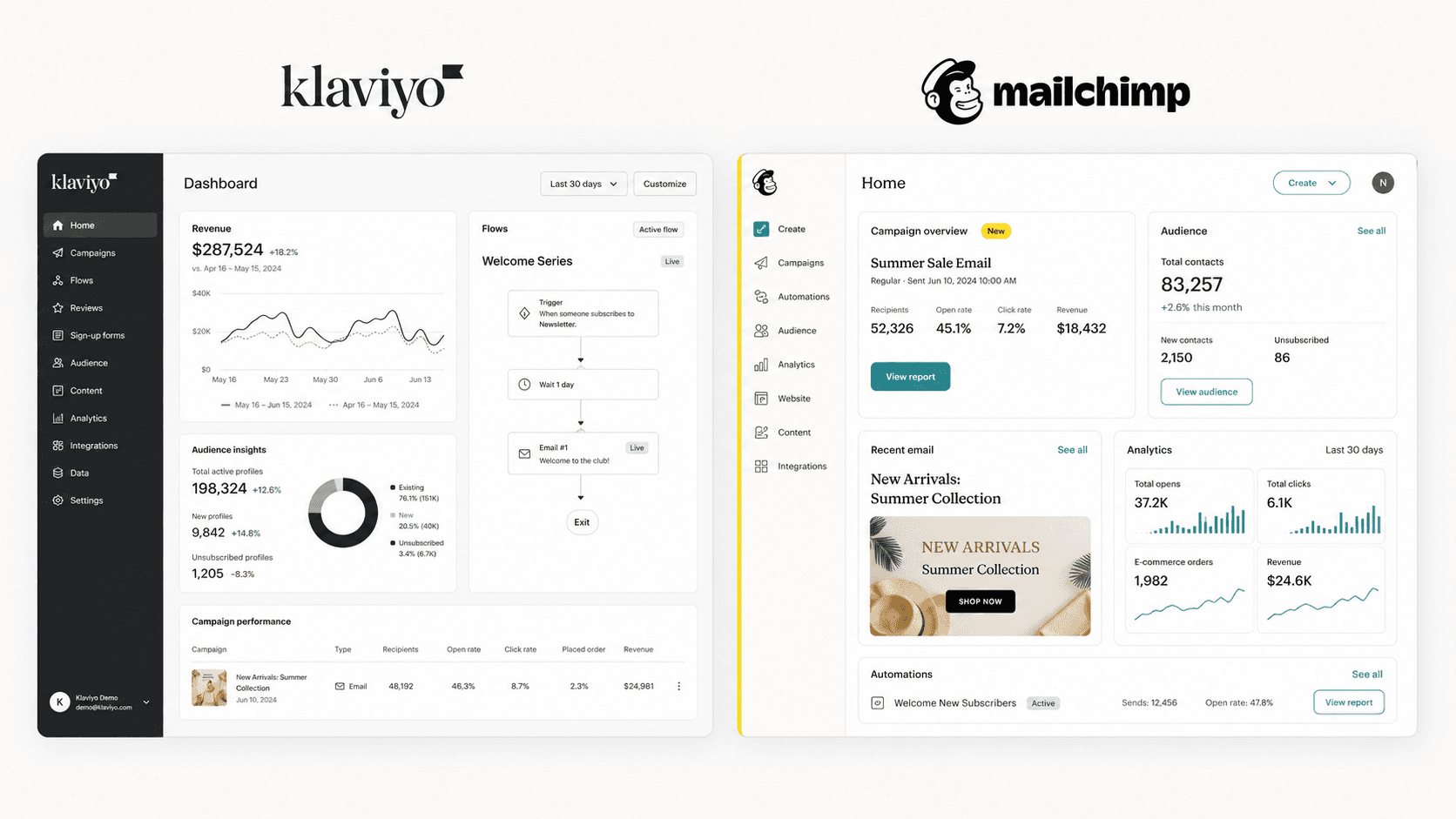
When you're sending out emails, you obviously want to know how they're doing, right? Both Klaviyo and Mailchimp give you ways to check this, but they go about it a little differently, especially if you're running an online store.
E-commerce Specific Reporting
Klaviyo really leans into its e-commerce roots here. It shows you data like revenue generated directly from campaigns and automated flows. You can see the return on investment (ROI) for specific campaigns, like a welcome series or a cart abandonment flow. This makes it super clear which emails are actually making you money. For example, Klaviyo might show a welcome flow bringing in $12,340 monthly revenue with an 18.5:1 ROI, while Mailchimp might just show you opens and clicks, requiring you to connect other tools and do the math yourself.
Understanding how your emails translate directly into sales is key for any online business. It's not just about how many people open your email, but how many of those people actually buy something because of it.
Understanding Key Performance Metrics
Both platforms track the usual suspects: open rates, click-through rates, and unsubscribe rates. Mailchimp has a neat trick up its sleeve, though. It lets you exclude opens from Apple's Mail Privacy Protection (MPP). Since Apple automatically opens emails for users, this can skew your open rates. Being able to filter that out gives you a more honest look at how your subject lines and content are really performing. Klaviyo also offers benchmark data, letting you compare your results against others in your industry, which is pretty handy for seeing where you stand.
Here's a quick look at what you can typically test:
Subject Lines: See which headlines grab attention.
Email Content: Test different calls to action or layouts.
Send Times: Figure out when your audience is most likely to engage.
Mailchimp allows up to three variations for A/B testing on paid plans, while Klaviyo supports two variations, even on its free plan.
Data Insights for Strategic Decisions
Beyond just numbers, you want insights. Klaviyo's predictive analytics, powered by its AI, can help forecast things like customer churn or when a customer might make their next purchase. This lets you get ahead of the curve. Mailchimp also has AI features, like its Creative Assistant, which can help design emails and even write copy. For e-commerce businesses, Klaviyo's ability to segment based on actual purchase behavior â like customers who bought coffee but not a grinder â offers a significant advantage for targeted campaigns. Mailchimp's segmentation is more general, often relying on basic engagement like opening past emails. This difference in segmentation depth can really impact your conversion rates, with Klaviyo often driving higher results due to its focus on customer actions. If you're serious about using your email data to make smarter business moves, Klaviyo's e-commerce-focused analytics are hard to beat. You can explore detailed reporting on campaigns and flows, helping you optimize your marketing strategy.
Making The Final Decision For Your Business
Choosing Based on Business Model
So, you've looked at all the bells and whistles, the fancy features, and the price tags. Now what? The biggest factor in deciding between Klaviyo and Mailchimp really boils down to what kind of business you're running. If your online store is your main gig, the engine that drives your income, then Klaviyo is probably where you want to be. It's built from the ground up for e-commerce, meaning it talks directly to your shop â think Shopify, WooCommerce, or BigCommerce â and pulls in all sorts of useful info about who's buying what, or even just looking at things. This lets you send super targeted emails that actually make people want to buy.
On the flip side, if you're more of a general business, maybe a local shop, a service provider, or a blogger who occasionally sells something, Mailchimp might feel more comfortable. It's like the Swiss Army knife of marketing tools â it does a bit of everything, from sending out newsletters to managing social posts. It's generally easier to get started with if you're not super tech-savvy or if email marketing is just one small part of your overall plan. For businesses just dipping their toes into email marketing, Mailchimp might be the better choice.
Considering Your Budget and Growth Plans
Let's talk money. Mailchimp often looks cheaper upfront, especially when you're just starting out. It's a good way to test the waters without a huge commitment. But here's the thing: as your business grows and you want to do more with your emails â like send them to more people or set up fancy automated sequences â Mailchimp can start to get surprisingly expensive, and you might not get as much bang for your buck. Klaviyo, while it might seem pricier initially, is designed to grow with you. It's built to handle more complex needs, and many businesses find that the increased revenue it helps generate justifies the cost. For e-commerce brands aiming for significant growth, Klaviyo often proves more cost-effective in the long run due to its superior revenue-driving capabilities.
Think about where you want to be in a year or two. If you're planning to really lean into email marketing as a major way to make sales, investing in a platform like Klaviyo early on might save you headaches and money down the line. It's designed to scale effectively, supporting businesses from their startup phase and beyond.
When To Migrate Between Platforms
Sometimes, you start with one platform and realize it's not cutting it anymore. This is a pretty common story for e-commerce businesses. Many start with Mailchimp because it's accessible, but as their revenue climbs â say, past $10,000 a month â they hit its limits. Segmentation becomes clunky, automation feels basic, and tracking actual sales from emails is a chore. That's usually the tipping point to migrate to Klaviyo.
The migration process itself isn't usually too painful. You'll export your list from Mailchimp, import it into Klaviyo, reconnect your store, and then rebuild your automated emails and segments. It typically takes a week or two to get everything set up properly. The good news is you don't lose your engagement history; Klaviyo can import that data, and it syncs directly with your store's purchase history. It's a bit of work, but the payoff in terms of better targeting and increased sales can be huge. For example, a beauty brand that moved from Mailchimp to Klaviyo saw its email revenue jump from $2,800 to over $11,400 per month within six months, all while only paying a bit more for the service.
Migrating platforms can feel daunting, but it's often a necessary step for businesses that have outgrown their initial tools. The key is to plan the move carefully and understand the benefits you're aiming for, whether it's better segmentation, more powerful automation, or more accurate revenue tracking. Don't be afraid to make the switch if your current platform is holding back your growth potential.
So, Which One Should You Pick?
Alright, so we've looked at Klaviyo and Mailchimp, and it's pretty clear they're not really aiming for the same people. If you're running an online store, especially one that's doing decent business, Klaviyo seems like the way to go. It's built for that, pulling in all your customer data so you can send really targeted emails that actually make sales. Mailchimp, on the other hand, is more of a generalist. It's good if you're just starting out, have a simpler business, or need a tool that does a bit of everything without breaking the bank. Just remember, as your business grows, Mailchimp might start to feel a bit limiting, and Klaviyo can get pricey. Think about what you need now and where you see your business heading in the next year or two. That'll probably point you in the right direction.
Frequently Asked Questions
What's the main difference between Klaviyo and Mailchimp?
Think of Klaviyo as a super-smart tool built just for online stores, especially those selling things. It helps you understand exactly what your customers like and buy so you can send them really targeted emails. Mailchimp is more like a general-purpose tool for all sorts of small businesses. It can do email, but also other marketing stuff like making simple websites or posting on social media. It's good if you need a bit of everything and are just starting out.
Which platform is better for making sales online?
If your main goal is to sell products online and make more money from your website, Klaviyo is usually the better choice. It's designed to connect deeply with online stores like Shopify or WooCommerce. This means it can track what people look at, what they put in their cart, and what they actually buy, helping you send emails that encourage sales.
Is Mailchimp easier to use for beginners?
Yes, Mailchimp is often seen as easier to get started with, especially if you're new to email marketing. Its setup is pretty straightforward, and it has a lot of ready-to-use templates. Klaviyo can have a bit more of a learning curve because it has so many powerful features for online stores.
How does pricing compare between Klaviyo and Mailchimp?
Both platforms charge based on how many contacts you have. Generally, Mailchimp can seem cheaper at first, especially for smaller lists. However, as your list grows or you need more advanced features, both can become quite expensive. Klaviyo's pricing reflects its focus on e-commerce features, while Mailchimp's costs can add up with extra features or larger lists, sometimes without giving you as much specialized value.
Can I connect these tools to my existing business software?
Both Klaviyo and Mailchimp offer ways to connect with other apps you might be using. Klaviyo has many direct connections, especially for e-commerce platforms. Mailchimp also has a good number of integrations. If a direct connection isn't available, both can usually work with a tool called Zapier, which helps different apps talk to each other.
Which platform offers better automation for marketing?
Klaviyo really stands out when it comes to automation, especially for online stores. It has advanced features to automatically send emails based on customer actions, like forgetting an item in their cart or making a purchase. Mailchimp offers automation too, but it's generally more basic and less tailored for the specific needs of e-commerce businesses.
Klaviyo vs Mailchimp for ecommerce in 2026. Comparing features, pricing, automation, and which platform drives more revenue for online stores.
Choosing the right email marketing tool can really make or break your business's outreach efforts. You've probably heard of both Klaviyo and Mailchimp, and maybe you're wondering which one is the better fit for you in 2026. They both send emails, sure, but they're actually built for pretty different things. This guide is going to break down the Klaviyo vs Mailchimp debate, looking at features, costs, and who each platform is best for, so you can stop guessing and start growing.
Key Takeaways
Klaviyo is the go-to for e-commerce businesses, especially those on platforms like Shopify or WooCommerce, because it's built to track sales and customer behavior deeply.
Mailchimp is more of a generalist, great for small businesses or those who need a simple tool for basic email campaigns and a few other marketing tasks.
When it comes to automation, Klaviyo offers more advanced options tailored for e-commerce, like abandoned cart sequences, while Mailchimp's are more basic.
Pricing can be tricky; Mailchimp might seem cheaper at first but can get expensive with add-ons, whereas Klaviyo's cost is more directly tied to its powerful e-commerce features.
Your business model and how much you rely on email for revenue should be the biggest factors when deciding between Klaviyo vs Mailchimp.
Understanding The Core Differences: Klaviyo vs Mailchimp
When you're trying to figure out which email marketing tool is the right fit for your business in 2026, it's easy to get lost in all the features. But at its heart, the choice between Klaviyo and Mailchimp comes down to what kind of business you're running and what you need that platform to do.
Who Each Platform Is Designed For
Think of it this way: Klaviyo was built from the ground up with online stores in mind. If you're selling products through platforms like Shopify, WooCommerce, or BigCommerce, Klaviyo connects directly to your store. It pulls in all sorts of customer data â what they've bought, what they've looked at, even what's sitting in their cart. This makes it super powerful for sending really specific messages to your customers. For example, a Shopify store owner can easily set up emails for people who leave items in their cart or a welcome series for new subscribers.
Mailchimp, on the other hand, started out as a simpler email tool and has grown into something more general. It's good for all sorts of small businesses, not just online stores. If you're a freelancer, a service provider, or a blogger, Mailchimp offers tools for landing pages, social media posts, and even a basic website builder. It's often seen as a good starting point for businesses that need a bit of everything without a complicated setup.
Key Differentiators at a Glance
Here's a quick look at how they stack up:
Klaviyo: Primarily for e-commerce, advanced automation, deep customer data integration, strong revenue tracking.
Mailchimp: General marketing, easier for beginners, broader features beyond email (landing pages, social), good for diverse business types.
The main difference boils down to focus. Klaviyo is laser-focused on helping online stores make more money through email and SMS. Mailchimp aims to be a one-stop shop for a wider range of marketing tasks, which can be great if you're not solely reliant on e-commerce sales.
Evolution of Email Marketing Tools
Email marketing tools have changed a lot. They've gone from just sending out newsletters to becoming sophisticated platforms that can predict customer behavior and automate complex customer journeys. Both Klaviyo and Mailchimp have evolved, but they've taken different paths. Klaviyo has doubled down on e-commerce data and automation, making it a go-to for online retailers looking to maximize sales. Mailchimp has broadened its scope, trying to be a solution for many different marketing needs, which can sometimes mean it's not as specialized for e-commerce as Klaviyo. This comparison delves into Klaviyo versus Mailchimp, examining their features and how they stack up for businesses in 2026. This guide breaks down everything you need to know.
Feature Deep Dive: Automation And Segmentation
When you're trying to get your marketing to actually do something, automation and segmentation are your best friends. They're how you stop sending the same generic message to everyone and start talking to people like you actually know them. Both Klaviyo and Mailchimp have tools for this, but they go about it a bit differently.
Advanced Automation Capabilities
Think of automation as setting up little email robots that do tasks for you. Klaviyo calls these "flows." They're triggered by customer actions, like signing up for your newsletter or leaving items in their cart. You can build pretty complex sequences with these flows, including things like welcome series, abandoned cart reminders, and post-purchase follow-ups. What's neat is that these flows can change based on what the customer does next. If someone buys something after getting an abandoned cart email, the flow can stop. Mailchimp also has automation, which they call "Marketing Automation Flows." On their basic plans, you're limited to pretty simple, one-step automations. To get to the more complex, multi-step workflows that can really make a difference, you'll need to upgrade.
Building out sophisticated automation sequences can feel like a puzzle, but when it clicks, it saves you so much time and makes your emails feel way more relevant to the person getting them.
Klaviyo's automation is generally seen as more robust, especially for e-commerce. They have a lot of pre-built flows specifically for online stores that you can use right away. Mailchimp offers some pre-built journeys too, like welcome series and cart abandonment, but they often require more tweaking to work well for a specific business.
Segmentation Power and Flexibility
Segmentation is all about dividing your audience into smaller groups so you can send them more targeted messages. Klaviyo really shines here. You can create segments based on all sorts of data, like purchase history, how much they've spent, or even what they've looked at on your site. These segments update automatically, so you're always talking to the right people. This means you can easily target, say, customers who bought a specific product but haven't bought a related item yet. Mailchimp also lets you segment your audience, using tags, groups, and filters. You can segment based on contact details, engagement with past emails, and even how they signed up. However, on their free plan, you're limited to just five filters, and you'll need a premium plan for unlimited ones. Klaviyo's ability to create dynamic segments that automatically adjust based on contact criteria is a significant advantage [e809].
Personalization and Dynamic Content Options
Once you've got your segments, you want to make sure the emails feel personal. Both platforms allow for personalization using merge tags (like *|FNAME|* in Mailchimp or *|FIRST_NAME|* in Klaviyo) to insert a contact's name. But it goes deeper. Klaviyo allows for dynamic content blocks within emails. This means you can have one email template, but different parts of the email can change based on who is receiving it. For example, you could show different product recommendations to different segments within the same email campaign. Mailchimp also supports dynamic content, allowing you to tailor content based on contact properties or group membership. However, Klaviyo's deep integration with e-commerce data often makes its dynamic content feel more powerful and relevant for online stores, especially when it comes to product recommendations.
Here's a quick look at how they stack up:
Feature | Klaviyo | Mailchimp |
|---|---|---|
Automation Complexity | High (advanced flows, conditional splits) | Medium (basic on lower plans, advanced on higher) |
Segmentation Basis | Purchase history, browsing behavior, predictive analytics | Contact details, email engagement, basic purchase data |
Dynamic Content | Robust, e-commerce focused | Good, adaptable |
Real-time Updates | Yes, for segments and flows | Varies by plan and feature |
When you're looking at which platform to use, think about how much you need your emails to do on autopilot and how specific you need to get with your audience targeting. For businesses that are heavily e-commerce focused, Klaviyo's advanced features in automation and segmentation often give it an edge [5bb0].
E-commerce Focus: Where Klaviyo Shines
When you're running an online store, especially one that's growing, you need tools that understand the unique rhythm of e-commerce. That's where Klaviyo really steps up. It was built from the ground up with online businesses in mind, and you can tell. Mailchimp is a great general tool, but Klaviyo feels like it speaks the language of Shopify, WooCommerce, and other e-commerce platforms fluently.
Native E-commerce Integrations
This is a big one. Klaviyo connects directly with most major e-commerce platforms. Think Shopify, BigCommerce, WooCommerce, and Magento. It doesn't just connect; it pulls in a ton of data in real-time. This means your customer lists, order history, and browsing behavior are always up-to-date. For Shopify users, the integration is particularly tight, syncing data instantly so your automated emails and segments are always working with the latest info. Mailchimp has integrations too, but they often don't go as deep, meaning you might miss out on detailed customer behavior data that Klaviyo captures easily.
Revenue Attribution and Tracking
Ever wonder exactly how much money an email campaign brought in? Klaviyo makes this super clear. It shows you the revenue generated by each email, each automated flow, and even individual messages. This kind of direct tracking is pretty much built-in. With Mailchimp, you often have to connect other tools and do some manual math to get a similar picture.
Klaviyo's ability to directly link marketing efforts to sales figures is a game-changer for online stores. It removes a lot of the guesswork and helps you see what's actually working to drive revenue.
Here's a quick look at what that difference can mean:
Feature | Klaviyo Example | Mailchimp Example |
|---|---|---|
Campaign Revenue | $4,250 revenue, 3.2:1 ROI | 85 clicks, "requires integration for conversion tracking" |
Welcome Flow Revenue | $12,340 monthly revenue, 18.5:1 ROI | Generic template, needs heavy customization |
Tailored Workflows for Online Stores
Klaviyo comes with a bunch of pre-built automation flows specifically for e-commerce. We're talking about things like:
Welcome Series: Greeting new subscribers and introducing your brand.
Abandoned Cart Flows: Reminding shoppers about items left behind.
Post-Purchase Flows: Thanking customers, asking for reviews, and suggesting related items.
Win-Back Campaigns: Re-engaging customers who haven't shopped in a while.
These flows are designed to work right out of the box. Mailchimp has automation templates, but they're usually more generic and require a lot more effort to adapt for specific e-commerce needs. This means you can get sophisticated marketing campaigns running much faster with Klaviyo, helping you recover lost sales and build customer loyalty without needing to be a tech wizard. If you're serious about growing your online store, Klaviyo's e-commerce specific features are hard to beat. It's why so many brands eventually migrate to Klaviyo after starting with more general tools.
Broader Marketing Needs: Mailchimp's Appeal
Mailchimp started out as a pretty straightforward tool for sending out email newsletters. Over the years, it's grown into something much bigger, trying to be a one-stop shop for a lot of different marketing tasks. If you're running a small business, maybe a local shop or a service provider, and you don't have a huge e-commerce operation, Mailchimp can feel like a good fit. It's often seen as the easier option to get started with, especially if you're not super tech-savvy.
General Purpose Marketing Features
Mailchimp has expanded beyond just email. You can create landing pages, post on social media, and even build a basic website right within the platform. This all-in-one approach is appealing if you want to keep things simple and manage different marketing activities from a single dashboard. It's designed to be accessible, so you don't need to be a marketing guru to figure it out. For many businesses, this broad functionality means they don't have to juggle multiple subscriptions for basic marketing tasks.
Ease of Use for Beginners
When you first log into Mailchimp, it generally feels less intimidating than some other platforms. The interface is usually pretty clean, and they have a drag-and-drop email builder that makes creating visually appealing emails straightforward. They also offer a bunch of templates that are good for various things, not just selling products online. Think event invitations, simple announcements, or just a regular newsletter. This makes it a popular choice for folks just starting out with email marketing or those who don't have a lot of time to learn complex software. It's a tool that lets you get campaigns out the door without a massive learning curve.
Versatility Across Business Types
Because Mailchimp isn't tied specifically to e-commerce, it works for a wider range of businesses. If you're a consultant, a non-profit, a freelancer, or a brick-and-mortar store that just wants to keep customers informed, Mailchimp can handle that. It's built to be flexible. You can manage your contacts, send out updates, and track basic engagement without needing to connect a complex online store. This makes it a solid option for businesses where email is more about communication and less about direct online sales. It's good to know that a significant percentage of consumers are still opting into email communications, no matter the business type.
Mailchimp's strength lies in its broad appeal and user-friendly design, making it a go-to for businesses that need a straightforward way to manage general marketing communications without getting bogged down in e-commerce specifics.
Pricing Structures And Scalability
When you're looking at email marketing platforms, the price tag is obviously a big deal. It's not just about the monthly fee, though; you've got to think about what you're actually getting for your money and how that cost will change as your business grows. Both Klaviyo and Mailchimp have different ways of charging, and understanding these differences can save you a lot of headaches down the road.
Comparing Cost at Different Tiers
Mailchimp tends to have a more tiered approach. You pick a plan, and that plan dictates which features you can use. For example, their free plan is pretty basic, good for just getting started with newsletters. As you move up to Essentials, Standard, and then Premium, you unlock more advanced features like multi-step automations and better segmentation. The catch? Mailchimp's most powerful segmentation tools, which are really useful for e-commerce, are locked behind their Premium plan, which starts at a pretty hefty $350 a month for 10,000 contacts. This can put some of their best capabilities out of reach for many smaller businesses.
Klaviyo, on the other hand, has a different philosophy. Their pricing is based on the number of active profiles you have in your account. As of 2025, they updated their model to charge based on your total active profile count, not just who you're actively sending emails to. The cool thing here is that all paid plans include every feature. So, whether you're on a basic plan or a more advanced one, you get access to their advanced segmentation, predictive analytics, and A/B testing tools right away. There are no feature gates between tiers. This means your access to the platform's tools stays the same as your list grows, which is a big plus if you want to use all the bells and whistles from day one. While Klaviyo's pricing can become noticeably higher as your list grows compared to Mailchimp at smaller list sizes, the upfront access to all features is a significant advantage for businesses that plan to use them.
Here's a quick look at how they stack up at the entry-level paid tiers:
Feature | Klaviyo (Email Plan) | Mailchimp (Essentials) |
|---|---|---|
Starting Price (approx.) | $20/mo | $13/mo |
Contact Limit (starting) | 251-500 profiles | 500 contacts |
Included Features | All features | Basic features, 24/7 support |
Understanding Hidden Fees and Add-ons
One thing to really watch out for with Mailchimp is how they count contacts. They charge for contacts who have unsubscribed but are still in your account. If you're not diligent about cleaning your list, your bill can creep up unexpectedly. It's a detail that can catch people off guard. Klaviyo's model, while potentially more expensive as your list grows, is generally more straightforward in what it bills you for â active profiles.
While Mailchimp might seem cheaper initially, especially for smaller lists, the cost can escalate quickly as your needs become more sophisticated. Features that are standard in Klaviyo often require upgrading to Mailchimp's highest tiers or paying for add-ons, making the total cost of ownership higher than it first appears. This is a key point to consider when evaluating app ecosystems.
Value Proposition for Growing Businesses
For businesses that are serious about e-commerce and want to use advanced marketing tactics, Klaviyo's value proposition is strong. You pay for access to a powerful suite of tools that are built specifically for online stores. This means you get robust revenue attribution, deep segmentation based on purchase history, and sophisticated automation flows right out of the box. While the cost might be higher as your list expands, the ability to drive revenue through these advanced features often justifies the investment. It's about paying for capabilities that directly impact your bottom line.
Mailchimp's value is more in its general-purpose appeal and ease of use for beginners. If your primary need is sending out a regular newsletter and you don't require complex e-commerce specific automations or deep data analysis, Mailchimp can be a cost-effective solution. However, as your business scales and your marketing needs become more advanced, you might find yourself hitting feature limitations or facing significant cost increases to access the tools you need. This is why many growing e-commerce brands eventually migrate between platforms.
Ultimately, the best choice depends on your specific business model and how you plan to use the platform. If you're a data-driven e-commerce business looking to maximize revenue through personalization and automation, Klaviyo's pricing structure, while potentially higher at scale, offers better long-term value. If you're a small business with simpler needs or operate outside of e-commerce, Mailchimp might be a more budget-friendly starting point.
Integrations And Technical Considerations
Evaluating App Ecosystems
When you're picking an email marketing tool, it's not just about what it does on its own. You've got to think about how it plays with all the other software you already use. Both Klaviyo and Mailchimp have pretty big app stores, but they lean in different directions. Klaviyo really focuses on connecting with e-commerce platforms and related tools. Think Shopify, WooCommerce, and things like loyalty programs or review apps. They pull in a lot of detailed customer data from these places. Mailchimp, on the other hand, has a wider net, connecting with all sorts of business tools, from website builders like Wix to social media platforms and CRMs. It's about finding the one that talks to your specific tools.
Connecting Your Existing Tech Stack
So, what does this mean for your business? If you're running an online store, especially on platforms like Shopify, Klaviyo's direct connections are a big deal. It means data flows more smoothly, and you can set up more targeted campaigns based on what people are actually buying or browsing. Mailchimp can connect too, but sometimes it needs a bit more work to get the same level of detail. The key is to list out all the software your business relies on and then check which platform offers the best, most direct integration.
Here's a quick look at what some common integrations look like:
E-commerce Platforms:
Klaviyo: Shopify, WooCommerce, BigCommerce (deep data sync)
Mailchimp: Shopify, WooCommerce, Wix, Squarespace (broader, less depth)
CRM & Sales:
Klaviyo: HubSpot, Salesforce (via third-party)
Mailchimp: HubSpot, Salesforce, Zoho CRM
Analytics:
Klaviyo: Google Analytics, Triple Whale
Mailchimp: Google Analytics
Setting up integrations can sometimes feel like a puzzle. You want everything to fit together perfectly so your data is accurate and your marketing efforts are well-informed. Don't underestimate the time it might take to get these connections just right.
Leveraging Zapier for Custom Needs
What if your essential tool isn't on either platform's direct integration list? That's where tools like Zapier come in. Both Klaviyo and Mailchimp play nicely with Zapier. This means you can create custom connections between almost any two apps. For example, maybe you use a specific project management tool and want to trigger an email when a task is completed. Zapier can help make that happen, bridging the gap and letting you build workflows that are unique to your business. It's a good safety net if you have a niche tech stack or a very specific automation in mind. It's worth noting that while both platforms offer easy self-service onboarding, some other tools might need more technical help to get set up [b37c].
Analytics, Reporting, And Performance
When you're sending out emails, you obviously want to know how they're doing, right? Both Klaviyo and Mailchimp give you ways to check this, but they go about it a little differently, especially if you're running an online store.
E-commerce Specific Reporting
Klaviyo really leans into its e-commerce roots here. It shows you data like revenue generated directly from campaigns and automated flows. You can see the return on investment (ROI) for specific campaigns, like a welcome series or a cart abandonment flow. This makes it super clear which emails are actually making you money. For example, Klaviyo might show a welcome flow bringing in $12,340 monthly revenue with an 18.5:1 ROI, while Mailchimp might just show you opens and clicks, requiring you to connect other tools and do the math yourself.
Understanding how your emails translate directly into sales is key for any online business. It's not just about how many people open your email, but how many of those people actually buy something because of it.
Understanding Key Performance Metrics
Both platforms track the usual suspects: open rates, click-through rates, and unsubscribe rates. Mailchimp has a neat trick up its sleeve, though. It lets you exclude opens from Apple's Mail Privacy Protection (MPP). Since Apple automatically opens emails for users, this can skew your open rates. Being able to filter that out gives you a more honest look at how your subject lines and content are really performing. Klaviyo also offers benchmark data, letting you compare your results against others in your industry, which is pretty handy for seeing where you stand.
Here's a quick look at what you can typically test:
Subject Lines: See which headlines grab attention.
Email Content: Test different calls to action or layouts.
Send Times: Figure out when your audience is most likely to engage.
Mailchimp allows up to three variations for A/B testing on paid plans, while Klaviyo supports two variations, even on its free plan.
Data Insights for Strategic Decisions
Beyond just numbers, you want insights. Klaviyo's predictive analytics, powered by its AI, can help forecast things like customer churn or when a customer might make their next purchase. This lets you get ahead of the curve. Mailchimp also has AI features, like its Creative Assistant, which can help design emails and even write copy. For e-commerce businesses, Klaviyo's ability to segment based on actual purchase behavior â like customers who bought coffee but not a grinder â offers a significant advantage for targeted campaigns. Mailchimp's segmentation is more general, often relying on basic engagement like opening past emails. This difference in segmentation depth can really impact your conversion rates, with Klaviyo often driving higher results due to its focus on customer actions. If you're serious about using your email data to make smarter business moves, Klaviyo's e-commerce-focused analytics are hard to beat. You can explore detailed reporting on campaigns and flows, helping you optimize your marketing strategy.
Making The Final Decision For Your Business
Choosing Based on Business Model
So, you've looked at all the bells and whistles, the fancy features, and the price tags. Now what? The biggest factor in deciding between Klaviyo and Mailchimp really boils down to what kind of business you're running. If your online store is your main gig, the engine that drives your income, then Klaviyo is probably where you want to be. It's built from the ground up for e-commerce, meaning it talks directly to your shop â think Shopify, WooCommerce, or BigCommerce â and pulls in all sorts of useful info about who's buying what, or even just looking at things. This lets you send super targeted emails that actually make people want to buy.
On the flip side, if you're more of a general business, maybe a local shop, a service provider, or a blogger who occasionally sells something, Mailchimp might feel more comfortable. It's like the Swiss Army knife of marketing tools â it does a bit of everything, from sending out newsletters to managing social posts. It's generally easier to get started with if you're not super tech-savvy or if email marketing is just one small part of your overall plan. For businesses just dipping their toes into email marketing, Mailchimp might be the better choice.
Considering Your Budget and Growth Plans
Let's talk money. Mailchimp often looks cheaper upfront, especially when you're just starting out. It's a good way to test the waters without a huge commitment. But here's the thing: as your business grows and you want to do more with your emails â like send them to more people or set up fancy automated sequences â Mailchimp can start to get surprisingly expensive, and you might not get as much bang for your buck. Klaviyo, while it might seem pricier initially, is designed to grow with you. It's built to handle more complex needs, and many businesses find that the increased revenue it helps generate justifies the cost. For e-commerce brands aiming for significant growth, Klaviyo often proves more cost-effective in the long run due to its superior revenue-driving capabilities.
Think about where you want to be in a year or two. If you're planning to really lean into email marketing as a major way to make sales, investing in a platform like Klaviyo early on might save you headaches and money down the line. It's designed to scale effectively, supporting businesses from their startup phase and beyond.
When To Migrate Between Platforms
Sometimes, you start with one platform and realize it's not cutting it anymore. This is a pretty common story for e-commerce businesses. Many start with Mailchimp because it's accessible, but as their revenue climbs â say, past $10,000 a month â they hit its limits. Segmentation becomes clunky, automation feels basic, and tracking actual sales from emails is a chore. That's usually the tipping point to migrate to Klaviyo.
The migration process itself isn't usually too painful. You'll export your list from Mailchimp, import it into Klaviyo, reconnect your store, and then rebuild your automated emails and segments. It typically takes a week or two to get everything set up properly. The good news is you don't lose your engagement history; Klaviyo can import that data, and it syncs directly with your store's purchase history. It's a bit of work, but the payoff in terms of better targeting and increased sales can be huge. For example, a beauty brand that moved from Mailchimp to Klaviyo saw its email revenue jump from $2,800 to over $11,400 per month within six months, all while only paying a bit more for the service.
Migrating platforms can feel daunting, but it's often a necessary step for businesses that have outgrown their initial tools. The key is to plan the move carefully and understand the benefits you're aiming for, whether it's better segmentation, more powerful automation, or more accurate revenue tracking. Don't be afraid to make the switch if your current platform is holding back your growth potential.
So, Which One Should You Pick?
Alright, so we've looked at Klaviyo and Mailchimp, and it's pretty clear they're not really aiming for the same people. If you're running an online store, especially one that's doing decent business, Klaviyo seems like the way to go. It's built for that, pulling in all your customer data so you can send really targeted emails that actually make sales. Mailchimp, on the other hand, is more of a generalist. It's good if you're just starting out, have a simpler business, or need a tool that does a bit of everything without breaking the bank. Just remember, as your business grows, Mailchimp might start to feel a bit limiting, and Klaviyo can get pricey. Think about what you need now and where you see your business heading in the next year or two. That'll probably point you in the right direction.
Frequently Asked Questions
What's the main difference between Klaviyo and Mailchimp?
Think of Klaviyo as a super-smart tool built just for online stores, especially those selling things. It helps you understand exactly what your customers like and buy so you can send them really targeted emails. Mailchimp is more like a general-purpose tool for all sorts of small businesses. It can do email, but also other marketing stuff like making simple websites or posting on social media. It's good if you need a bit of everything and are just starting out.
Which platform is better for making sales online?
If your main goal is to sell products online and make more money from your website, Klaviyo is usually the better choice. It's designed to connect deeply with online stores like Shopify or WooCommerce. This means it can track what people look at, what they put in their cart, and what they actually buy, helping you send emails that encourage sales.
Is Mailchimp easier to use for beginners?
Yes, Mailchimp is often seen as easier to get started with, especially if you're new to email marketing. Its setup is pretty straightforward, and it has a lot of ready-to-use templates. Klaviyo can have a bit more of a learning curve because it has so many powerful features for online stores.
How does pricing compare between Klaviyo and Mailchimp?
Both platforms charge based on how many contacts you have. Generally, Mailchimp can seem cheaper at first, especially for smaller lists. However, as your list grows or you need more advanced features, both can become quite expensive. Klaviyo's pricing reflects its focus on e-commerce features, while Mailchimp's costs can add up with extra features or larger lists, sometimes without giving you as much specialized value.
Can I connect these tools to my existing business software?
Both Klaviyo and Mailchimp offer ways to connect with other apps you might be using. Klaviyo has many direct connections, especially for e-commerce platforms. Mailchimp also has a good number of integrations. If a direct connection isn't available, both can usually work with a tool called Zapier, which helps different apps talk to each other.
Which platform offers better automation for marketing?
Klaviyo really stands out when it comes to automation, especially for online stores. It has advanced features to automatically send emails based on customer actions, like forgetting an item in their cart or making a purchase. Mailchimp offers automation too, but it's generally more basic and less tailored for the specific needs of e-commerce businesses.
Other Blogs
Other Blogs
Check our other project Blogs with useful insight and information for your businesses

Other Blogs
Other Blogs
Check our other project Blogs with useful insight and information for your businesses