Our Three Step Process
May 16, 2026
Mastering Klaviyo Flows: Your Ultimate Guide to 2026 Automation Success
Our Three Step Process
May 16, 2026
Mastering Klaviyo Flows: Your Ultimate Guide to 2026 Automation Success
Master Klaviyo flows for e-commerce success in 2026. Our guide covers essential, advanced, and international flows for ultimate automation.
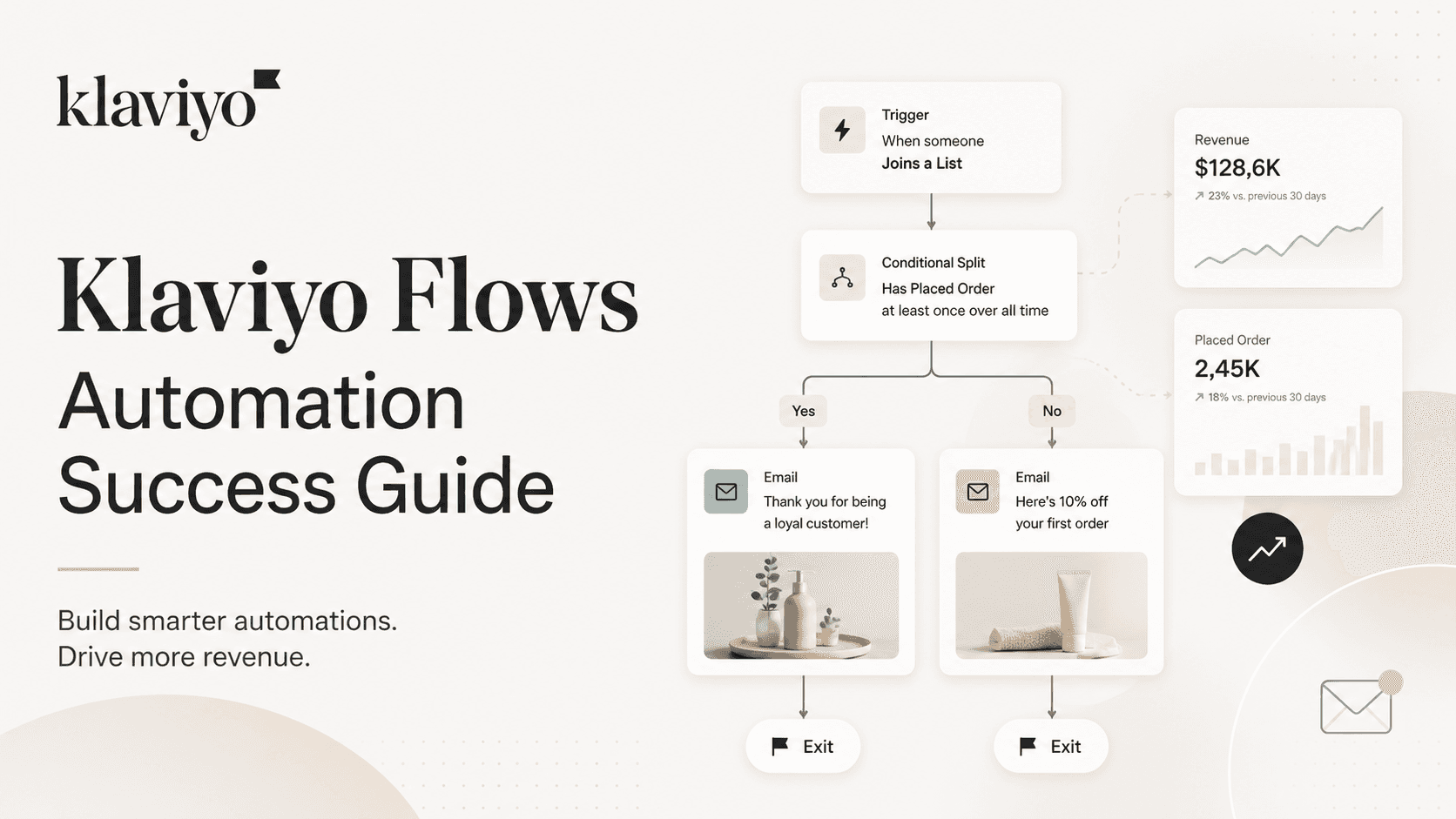
Getting your e-commerce business ready for 2026 means getting smart about how you talk to customers. People still really like email, even more than texts sometimes. Klaviyo flows are basically automated emails and texts that go out when someone does something specific, like sign up or leave something in their cart. This guide is all about making those automated messages work for you, so you can sell more and keep customers happy without doing all the work yourself. We'll cover the basics, the must-haves, and even some advanced tricks to make your email marketing really shine.
Key Takeaways
Klaviyo flows are automated message sequences triggered by customer actions, designed to build customer journeys and boost sales.
Essential flows like Welcome Series and Abandoned Cart recovery are crucial for first impressions and recapturing lost sales, often generating a significant portion of revenue.
Advanced flows, including Browse Abandonment, Back in Stock, and Review Requests, help deepen customer engagement and gather valuable social proof.
Optimizing flows involves personalization, segmentation, A/B testing, and using AI for targeted messaging and improved customer lifetime value.
Integrating Klaviyo with platforms like Shopify and WooCommerce is straightforward, enabling data sync for personalized campaigns and cross-channel communication with email and SMS.
Understanding Klaviyo Flows For E-commerce Success
So, you're looking to get a handle on Klaviyo flows for your online store, huh? It's not as complicated as it sounds, honestly. Think of flows as automated messages that go out to your customers based on what they do — or don't do — on your website. It's like having a super-organized assistant who knows exactly when to send a follow-up email or a special offer without you having to lift a finger. With online sales expected to keep climbing, just sending out random newsletters isn't going to cut it anymore. People still like email, a lot actually, and these automated sequences help you connect with them in a way that feels personal and timely.
What Are Klaviyo Flows?
At their core, Klaviyo flows are automated email or SMS sequences. They're triggered by specific customer actions or events. For instance, if someone adds an item to their cart but doesn't buy it, a flow can automatically send them a reminder. Or, when a new person signs up for your mailing list, a welcome flow kicks in. Klaviyo has a bunch of pre-built flows you can use, and you can tweak them to fit your brand's voice and style. It's all about sending the right message to the right person at the right time, based on real-time data from your store. This is a big step up from just blasting out generic emails to everyone.
Why Klaviyo Flows Matter For Your Brand
Why bother with all this automation? Well, for starters, it helps you manage the entire customer journey without you having to be glued to your computer. You can set up messages to go out before, during, and after a purchase, which builds trust and keeps your brand in their mind. This isn't just about sending more emails; it's about sending smarter emails. These automated sequences can actually bring in a significant chunk of your revenue — sometimes 20-50% from just abandoned cart and welcome flows! Plus, customers appreciate getting relevant messages, and Klaviyo lets you send these through email and SMS, so you can reach them on their preferred channel. It's a way to automate customer lifecycle management and really boost your sales potential.
Key Triggers That Power Klaviyo Flows
Flows don't just send messages randomly; they're powered by triggers. These are the events that kick off an automated sequence. Here are some of the main ones you'll encounter:
Added to list: Someone signs up for your newsletter.
Added to segment: A customer meets certain criteria, like becoming a repeat buyer.
Metrics: Actions like viewing a product, starting the checkout process, or completing an order.
Date property: Special dates like birthdays or anniversaries.
Price drop: When a product a customer has shown interest in goes on sale.
Low inventory: If a product a customer viewed or has in their cart is running low on stock.
These triggers allow for some pretty neat personalization. You can split flows based on things like how much someone usually spends, if they're a new or returning customer, or even where they're located. This flexibility means you can create journeys that feel unique to each shopper. It's all about using the data you have to make your marketing more effective, and Klaviyo is a great platform for that.
Automating your customer communications means you can focus on other parts of your business, like product development or customer service, while still keeping your marketing engine running smoothly. It's about working smarter, not harder, to build those customer relationships.
Essential Klaviyo Flows To Implement
When you're starting out with Klaviyo, it's easy to get overwhelmed by all the possibilities. But honestly, you don't need a hundred different automations right away. Focusing on a few key flows can make a huge difference in how your customers interact with your brand and, more importantly, how much they buy. These are the workhorses, the ones that handle critical moments in the customer's journey.
Welcome Series For New Subscribers
This is your first handshake with someone who just signed up. It's super important to make a good impression. A welcome series isn't just one email; it's a short sequence designed to introduce your brand, show off what you offer, and maybe give them a little nudge to make their first purchase. Think of it as rolling out the red carpet.
Email 1 (Immediate): Welcome them, thank them for signing up, and deliver any promised incentive (like a discount code).
Email 2 (Day 2-3): Share your brand story or mission. People connect with brands that have a purpose.
Email 3 (Day 4-5): Highlight popular products or categories, maybe include some social proof like customer testimonials.
The goal here is to convert a new subscriber into a first-time buyer.
A strong welcome series can capture a significant portion of your email revenue, often between 20-50%. It sets the tone for future interactions and builds immediate trust.
Abandoned Cart And Checkout Recovery
This is where you chase down those almost-sales. Someone added items to their cart or even started the checkout process but didn't finish. Life happens, distractions occur, but you can bring them back. These flows are designed to remind people what they were interested in and gently encourage them to complete their purchase. It's like a helpful nudge at just the right time.
Abandoned Cart: Targets users who added items to their cart but didn't proceed to checkout.
Abandoned Checkout: Targets users who reached the checkout page but didn't complete the order.
These emails should remind them of the items left behind, perhaps offer a small discount or free shipping, and address any potential hesitations they might have had. Don't forget to include social proof or highlight unique selling points.
Post-Purchase Nurturing And Thank You
So, they bought something! Great. But don't stop there. The journey doesn't end at checkout. Post-purchase flows are about building loyalty and encouraging repeat business. This is your chance to thank them, provide helpful information about their order, and set them up for future purchases.
Order Confirmation: A clear, branded confirmation of their purchase.
Shipping Notification: Let them know when their order is on its way.
Thank You & Review Request: After they've received their item, thank them again and ask for a review. This is a great way to gather feedback and social proof. You might even offer a small incentive for leaving a review. This is a fantastic opportunity to build customer loyalty.
These flows help reduce buyer's remorse, improve customer satisfaction, and can even lead to repeat purchases sooner than you might expect. Setting these up is a smart move for any e-commerce business looking to grow.
Advanced Klaviyo Flows For Deeper Engagement
So, you've got the basics down with welcome series and abandoned cart reminders. That's great! But to really make your email marketing sing in 2026, you need to go a bit deeper. Think about those customers who are showing interest but haven't quite committed, or those who've bought from you before and might be ready for more. These advanced flows are where you can really connect with people on a more personal level and keep them coming back.
Browse Abandonment Strategies
This is for the window shoppers, the ones who looked at a specific product or category but didn't add anything to their cart. They're showing interest, but something stopped them. A browse abandonment flow can gently nudge them back. You can remind them of what they looked at, maybe highlight a few related items they might also like, or even offer a small incentive if they return within a certain timeframe. It's about showing them you noticed their interest and are ready to help them find what they're looking for.
Back In Stock Notifications
When a popular item flies off the shelves, customers get disappointed. Setting up a 'back in stock' notification flow is a lifesaver. Customers can sign up to be alerted when an item they wanted is available again. When it is, Klaviyo automatically sends them an email. This is a fantastic way to recapture lost sales and delight customers who were patiently waiting. You can even use this as an opportunity to suggest similar items if the original product isn't quite right for them anymore.
Product Review Requests
Happy customers are your best advertisers, but you need to ask for their opinions. A post-purchase flow that requests product reviews is gold. After a customer has had enough time to use the product, send them a friendly email asking for their feedback. Positive reviews build trust for new shoppers, and negative ones give you a chance to fix problems. You could offer a small discount on their next purchase as a thank you for their time. It's a win-win.
Sunset Flows For List Hygiene
Keeping your email list clean is super important for making sure your messages actually reach people and don't end up in spam. A sunset flow is designed to re-engage subscribers who haven't interacted with your emails in a while. You send them a final message, maybe with a special offer, asking if they still want to hear from you. If they don't respond, you can then remove them from your active list. This keeps your engagement rates high and your sender reputation healthy. It's a bit like tidying up your contacts so you can focus on the ones who are genuinely interested. This practice is key for maintaining good email deliverability.
Keeping your subscriber list active and engaged is more than just a good idea; it's a necessity for effective email marketing. Sending to people who no longer open your emails can hurt your sender reputation and lower your overall campaign performance. Proactive list cleaning through flows like sunset campaigns helps ensure your messages are seen by the right eyes.
Optimizing Your Klaviyo Flows For Maximum Impact
So, you've got your Klaviyo flows set up — that's awesome. But just having them running isn't the end goal, right? We need to make sure they're actually doing their job, and doing it well. Think of it like tuning up a car; you don't just want it to run, you want it to run smoothly and efficiently. This is where we get into the nitty-gritty of making your automations work harder for you.
Personalization and Segmentation Techniques
This is probably the biggest one. Sending the same message to everyone is like shouting into a crowded room — some people might hear you, but most won't really pay attention. Personalization means talking to your customers like you actually know them. This isn't just about slapping their first name on an email, though that's a start. It's about using the data you have to send them stuff they're actually interested in. Did they look at a specific product? Did they buy a certain category of items before? Use that info. Segmentation is how you group people so you can personalize effectively. You can group by purchase history, how much they spend, where they live, or even how recently they've interacted with you. This lets you send targeted messages that feel relevant, not random. For example, a customer who always buys your premium line probably doesn't need to see the same discount offers as someone who only buys sale items.
Leveraging A/B Testing For Improvement
Okay, so you've personalized and segmented. Now, how do you know if it's working as well as it could be? That's where A/B testing comes in. It's basically trying out two different versions of something — like an email subject line, a call-to-action button, or even the timing of a message — to see which one performs better. Klaviyo makes this pretty straightforward. You split your audience, send version A to one half and version B to the other, and then see which one gets more opens, clicks, or conversions. It's a bit like trying two different recipes for cookies to see which one your friends like more. You might think you know what will work best, but testing often reveals surprising results. For instance, a slightly different subject line could dramatically increase your open rates, or a different discount structure might lead to more completed purchases. Don't just guess; test.
Utilizing AI and Predictive Analytics
This is where things get a bit more futuristic, but it's already here. Klaviyo has tools that use artificial intelligence to predict what your customers might do next. It can estimate things like their lifetime value (how much they're likely to spend with you over time) or their churn risk (how likely they are to stop buying from you). This information is gold. You can use it to trigger specific flows. For example, if Klaviyo predicts a customer is at high risk of churning, you could automatically send them a special win-back offer. Or, if it predicts a customer is likely to make another purchase soon, you could send them a timely reminder or a related product suggestion. It's about being proactive rather than reactive, using data to anticipate needs and keep customers engaged. This kind of smart automation can really make a difference in building loyalty and driving repeat sales, especially in a competitive market. You can find 2026 email marketing insights to see how these strategies are performing across the industry.
The goal isn't just to send more emails, but to send the right emails to the right people at the right time. Optimization is an ongoing process, not a one-time fix. Regularly reviewing your flow performance and making adjustments based on data will keep your automations effective and your customers happy.
Integrating Klaviyo Flows With Your E-commerce Platform
Connecting Klaviyo to your online store is a big step. It's how the system knows what your customers are doing, like when they buy something or look at a product. Without this link, your automated emails and texts won't have the right information to be useful.
Shopify Integration For Seamless Data Sync
If you're using Shopify, getting Klaviyo hooked up is pretty straightforward. You'll find detailed guides right in your Klaviyo account to walk you through it. This connection lets Klaviyo pull in all sorts of customer data, like purchase history and browsing habits. This means you can create really specific customer groups, or segments, based on what they've actually done on your Shopify site. For Shopify Plus users, you can even link up with Shopify Flow for more advanced automation possibilities. Think about it: when an order comes in on Shopify, a Klaviyo follow-up sequence can start right away automatically. It's all about making sure the right message gets to the right person at the right time, without you having to do anything manually. This kind of integration is key to making your e-commerce conversion rates go up.
WooCommerce And Other Platform Connections
Don't worry if you're not on Shopify. Klaviyo also makes it simple to connect with WooCommerce. Just like with Shopify, there are clear instructions to get your customer data flowing into Klaviyo. This sync is the foundation for any good automated marketing. Even if your platform isn't one of the big names, Klaviyo likely has an integration ready to go. And if not, they provide documentation so you or your developer can build a custom connection. The goal is always to get that customer information into Klaviyo so you can start building those automated journeys.
Cross-Channel Automation With Email And SMS
Once your platform is connected, you can start thinking beyond just email. Klaviyo lets you combine email with SMS messages for a more complete customer experience. This means you can send a reminder text if someone leaves items in their cart, or follow up with an email after they've made a purchase. It's about reaching your customers on the channels they prefer, at the moments that matter most. Many third-party apps, like those for reviews or subscriptions, also connect with Klaviyo, expanding your automation options even further. This creates a whole ecosystem of automated communication that works together to keep customers engaged and coming back. It's a smart way to manage your customer relationships, and brands are seeing real results from these strategies, as seen in Behind the Brands 2026.
The real power comes when your e-commerce platform and your marketing automation tool speak the same language. This allows for real-time updates and truly personalized communication that makes customers feel understood and valued.
Internationalizing Your Klaviyo Flows
So, you've got customers all over the place, right? If they're used to shopping on your site in their own language and currency, sending them emails in a different format can really throw them off. It's like getting a bill in a language you don't understand — super confusing and probably not going to get paid.
Tailoring Content With Shopify Markets
If you're using Shopify, the integration with Shopify Markets is a game-changer here. It lets you connect your Klaviyo account so you can actually personalize emails based on what language and currency your customer is using. This means you can segment customers by the specific storefront they shopped on. You can even run reports and see revenue broken down by where people are located. The big win is communicating with each customer in the language they prefer, making the whole experience feel connected, from their shopping trip to their inbox.
Personalizing For Language And Currency
This is where you really make customers feel seen. Imagine someone in Germany getting an email that's not just in German, but also shows prices in Euros. That's the kind of detail that makes a difference. You can set up flows to track customer events based on their location. Then, you import your product catalog into Klaviyo, and your product recommendations in emails can be tailored to what that specific customer might be interested in, based on where they are.
Segmenting Global Audiences Effectively
When you're dealing with customers worldwide, just blasting the same message to everyone isn't going to cut it. You need to get smarter. Think about segmenting based on:
Location: Obvious, but important. Different regions have different holidays, trends, and even shipping considerations.
Language Preference: As mentioned, this is key for making customers feel understood.
Currency: Showing prices in their local currency removes a barrier to purchase.
Local Storefront: If you have different versions of your site for different regions, segmenting by which one they used is smart.
Getting this right means your automated emails feel less like generic spam and more like helpful, relevant communication. It builds trust and makes customers more likely to engage with your brand, no matter where they are in the world. It's about making your global customers feel like local ones.
Setting up these international flows can seem a bit much at first, especially if you're trying to figure out all the details yourself. But getting it right means your global customers get a much better experience, which can really help with sales. If you're looking for help with this, there are agencies that specialize in Shopify Plus development and can help you get your Klaviyo automations set up perfectly for different markets. They can also help with translating your Customer Hub content, which is another piece of the international puzzle.
Wrapping It Up: Your Path to 2026 Automation
So, we've gone through a lot about making Klaviyo work for your online store, especially looking ahead to 2026. It's not just about sending emails; it's about setting up smart, automatic messages that talk to your customers at just the right time. Think of it as building relationships on autopilot. By using these flows, you're not just selling products, you're making customers feel seen and valued. It takes a bit of setup, sure, but the payoff in sales and happy customers is totally worth it. Start small, test things out, and watch your business grow. You've got this.
Frequently Asked Questions
What exactly are Klaviyo flows?
Think of Klaviyo flows like automatic email or text message helpers. They send out messages based on what a customer does, like signing up for your emails or leaving something in their shopping cart. It's like having a personal assistant who knows exactly when to send the right message to each customer, making sure they feel special and don't miss out on anything.
Why are these automatic messages so important for online stores?
These automatic messages are super important because they help keep customers interested and buying things without you having to do all the work yourself. They make sure customers get helpful info at just the right time, like a welcome message when they first join or a reminder if they forget something in their cart. This helps stores make more money and keeps customers happy.
What's the difference between an abandoned cart and an abandoned checkout flow?
An 'abandoned cart' flow catches people who put items in their shopping cart but didn't go to checkout. An 'abandoned checkout' flow is for those who actually started the checkout process but didn't finish. Both are important for reminding shoppers about what they liked and encouraging them to complete their purchase.
How can I make my automatic messages feel more personal?
You can make your messages feel personal by using the customer's name, mentioning products they've looked at, or suggesting items they might like based on what they've bought before. Klaviyo helps you do this by using information you have about your customers to send them messages that feel like they were made just for them.
What does 'list hygiene' mean and why is it important?
List hygiene means keeping your email list clean and healthy. It's important because sending emails to people who don't open them anymore can hurt your store's reputation and make it harder for your emails to reach the right people. Flows like 'sunset flows' help by trying to re-engage inactive subscribers or gently removing them if they're not interested.
Can I use Klaviyo flows for customers in different countries?
Yes, you absolutely can! If you use Shopify Markets, you can connect it with Klaviyo to send messages in the customer's own language and currency. This makes your international customers feel more connected to your brand, just like your local ones do.
Master Klaviyo flows for e-commerce success in 2026. Our guide covers essential, advanced, and international flows for ultimate automation.
Getting your e-commerce business ready for 2026 means getting smart about how you talk to customers. People still really like email, even more than texts sometimes. Klaviyo flows are basically automated emails and texts that go out when someone does something specific, like sign up or leave something in their cart. This guide is all about making those automated messages work for you, so you can sell more and keep customers happy without doing all the work yourself. We'll cover the basics, the must-haves, and even some advanced tricks to make your email marketing really shine.
Key Takeaways
Klaviyo flows are automated message sequences triggered by customer actions, designed to build customer journeys and boost sales.
Essential flows like Welcome Series and Abandoned Cart recovery are crucial for first impressions and recapturing lost sales, often generating a significant portion of revenue.
Advanced flows, including Browse Abandonment, Back in Stock, and Review Requests, help deepen customer engagement and gather valuable social proof.
Optimizing flows involves personalization, segmentation, A/B testing, and using AI for targeted messaging and improved customer lifetime value.
Integrating Klaviyo with platforms like Shopify and WooCommerce is straightforward, enabling data sync for personalized campaigns and cross-channel communication with email and SMS.
Understanding Klaviyo Flows For E-commerce Success
So, you're looking to get a handle on Klaviyo flows for your online store, huh? It's not as complicated as it sounds, honestly. Think of flows as automated messages that go out to your customers based on what they do — or don't do — on your website. It's like having a super-organized assistant who knows exactly when to send a follow-up email or a special offer without you having to lift a finger. With online sales expected to keep climbing, just sending out random newsletters isn't going to cut it anymore. People still like email, a lot actually, and these automated sequences help you connect with them in a way that feels personal and timely.
What Are Klaviyo Flows?
At their core, Klaviyo flows are automated email or SMS sequences. They're triggered by specific customer actions or events. For instance, if someone adds an item to their cart but doesn't buy it, a flow can automatically send them a reminder. Or, when a new person signs up for your mailing list, a welcome flow kicks in. Klaviyo has a bunch of pre-built flows you can use, and you can tweak them to fit your brand's voice and style. It's all about sending the right message to the right person at the right time, based on real-time data from your store. This is a big step up from just blasting out generic emails to everyone.
Why Klaviyo Flows Matter For Your Brand
Why bother with all this automation? Well, for starters, it helps you manage the entire customer journey without you having to be glued to your computer. You can set up messages to go out before, during, and after a purchase, which builds trust and keeps your brand in their mind. This isn't just about sending more emails; it's about sending smarter emails. These automated sequences can actually bring in a significant chunk of your revenue — sometimes 20-50% from just abandoned cart and welcome flows! Plus, customers appreciate getting relevant messages, and Klaviyo lets you send these through email and SMS, so you can reach them on their preferred channel. It's a way to automate customer lifecycle management and really boost your sales potential.
Key Triggers That Power Klaviyo Flows
Flows don't just send messages randomly; they're powered by triggers. These are the events that kick off an automated sequence. Here are some of the main ones you'll encounter:
Added to list: Someone signs up for your newsletter.
Added to segment: A customer meets certain criteria, like becoming a repeat buyer.
Metrics: Actions like viewing a product, starting the checkout process, or completing an order.
Date property: Special dates like birthdays or anniversaries.
Price drop: When a product a customer has shown interest in goes on sale.
Low inventory: If a product a customer viewed or has in their cart is running low on stock.
These triggers allow for some pretty neat personalization. You can split flows based on things like how much someone usually spends, if they're a new or returning customer, or even where they're located. This flexibility means you can create journeys that feel unique to each shopper. It's all about using the data you have to make your marketing more effective, and Klaviyo is a great platform for that.
Automating your customer communications means you can focus on other parts of your business, like product development or customer service, while still keeping your marketing engine running smoothly. It's about working smarter, not harder, to build those customer relationships.
Essential Klaviyo Flows To Implement
When you're starting out with Klaviyo, it's easy to get overwhelmed by all the possibilities. But honestly, you don't need a hundred different automations right away. Focusing on a few key flows can make a huge difference in how your customers interact with your brand and, more importantly, how much they buy. These are the workhorses, the ones that handle critical moments in the customer's journey.
Welcome Series For New Subscribers
This is your first handshake with someone who just signed up. It's super important to make a good impression. A welcome series isn't just one email; it's a short sequence designed to introduce your brand, show off what you offer, and maybe give them a little nudge to make their first purchase. Think of it as rolling out the red carpet.
Email 1 (Immediate): Welcome them, thank them for signing up, and deliver any promised incentive (like a discount code).
Email 2 (Day 2-3): Share your brand story or mission. People connect with brands that have a purpose.
Email 3 (Day 4-5): Highlight popular products or categories, maybe include some social proof like customer testimonials.
The goal here is to convert a new subscriber into a first-time buyer.
A strong welcome series can capture a significant portion of your email revenue, often between 20-50%. It sets the tone for future interactions and builds immediate trust.
Abandoned Cart And Checkout Recovery
This is where you chase down those almost-sales. Someone added items to their cart or even started the checkout process but didn't finish. Life happens, distractions occur, but you can bring them back. These flows are designed to remind people what they were interested in and gently encourage them to complete their purchase. It's like a helpful nudge at just the right time.
Abandoned Cart: Targets users who added items to their cart but didn't proceed to checkout.
Abandoned Checkout: Targets users who reached the checkout page but didn't complete the order.
These emails should remind them of the items left behind, perhaps offer a small discount or free shipping, and address any potential hesitations they might have had. Don't forget to include social proof or highlight unique selling points.
Post-Purchase Nurturing And Thank You
So, they bought something! Great. But don't stop there. The journey doesn't end at checkout. Post-purchase flows are about building loyalty and encouraging repeat business. This is your chance to thank them, provide helpful information about their order, and set them up for future purchases.
Order Confirmation: A clear, branded confirmation of their purchase.
Shipping Notification: Let them know when their order is on its way.
Thank You & Review Request: After they've received their item, thank them again and ask for a review. This is a great way to gather feedback and social proof. You might even offer a small incentive for leaving a review. This is a fantastic opportunity to build customer loyalty.
These flows help reduce buyer's remorse, improve customer satisfaction, and can even lead to repeat purchases sooner than you might expect. Setting these up is a smart move for any e-commerce business looking to grow.
Advanced Klaviyo Flows For Deeper Engagement
So, you've got the basics down with welcome series and abandoned cart reminders. That's great! But to really make your email marketing sing in 2026, you need to go a bit deeper. Think about those customers who are showing interest but haven't quite committed, or those who've bought from you before and might be ready for more. These advanced flows are where you can really connect with people on a more personal level and keep them coming back.
Browse Abandonment Strategies
This is for the window shoppers, the ones who looked at a specific product or category but didn't add anything to their cart. They're showing interest, but something stopped them. A browse abandonment flow can gently nudge them back. You can remind them of what they looked at, maybe highlight a few related items they might also like, or even offer a small incentive if they return within a certain timeframe. It's about showing them you noticed their interest and are ready to help them find what they're looking for.
Back In Stock Notifications
When a popular item flies off the shelves, customers get disappointed. Setting up a 'back in stock' notification flow is a lifesaver. Customers can sign up to be alerted when an item they wanted is available again. When it is, Klaviyo automatically sends them an email. This is a fantastic way to recapture lost sales and delight customers who were patiently waiting. You can even use this as an opportunity to suggest similar items if the original product isn't quite right for them anymore.
Product Review Requests
Happy customers are your best advertisers, but you need to ask for their opinions. A post-purchase flow that requests product reviews is gold. After a customer has had enough time to use the product, send them a friendly email asking for their feedback. Positive reviews build trust for new shoppers, and negative ones give you a chance to fix problems. You could offer a small discount on their next purchase as a thank you for their time. It's a win-win.
Sunset Flows For List Hygiene
Keeping your email list clean is super important for making sure your messages actually reach people and don't end up in spam. A sunset flow is designed to re-engage subscribers who haven't interacted with your emails in a while. You send them a final message, maybe with a special offer, asking if they still want to hear from you. If they don't respond, you can then remove them from your active list. This keeps your engagement rates high and your sender reputation healthy. It's a bit like tidying up your contacts so you can focus on the ones who are genuinely interested. This practice is key for maintaining good email deliverability.
Keeping your subscriber list active and engaged is more than just a good idea; it's a necessity for effective email marketing. Sending to people who no longer open your emails can hurt your sender reputation and lower your overall campaign performance. Proactive list cleaning through flows like sunset campaigns helps ensure your messages are seen by the right eyes.
Optimizing Your Klaviyo Flows For Maximum Impact
So, you've got your Klaviyo flows set up — that's awesome. But just having them running isn't the end goal, right? We need to make sure they're actually doing their job, and doing it well. Think of it like tuning up a car; you don't just want it to run, you want it to run smoothly and efficiently. This is where we get into the nitty-gritty of making your automations work harder for you.
Personalization and Segmentation Techniques
This is probably the biggest one. Sending the same message to everyone is like shouting into a crowded room — some people might hear you, but most won't really pay attention. Personalization means talking to your customers like you actually know them. This isn't just about slapping their first name on an email, though that's a start. It's about using the data you have to send them stuff they're actually interested in. Did they look at a specific product? Did they buy a certain category of items before? Use that info. Segmentation is how you group people so you can personalize effectively. You can group by purchase history, how much they spend, where they live, or even how recently they've interacted with you. This lets you send targeted messages that feel relevant, not random. For example, a customer who always buys your premium line probably doesn't need to see the same discount offers as someone who only buys sale items.
Leveraging A/B Testing For Improvement
Okay, so you've personalized and segmented. Now, how do you know if it's working as well as it could be? That's where A/B testing comes in. It's basically trying out two different versions of something — like an email subject line, a call-to-action button, or even the timing of a message — to see which one performs better. Klaviyo makes this pretty straightforward. You split your audience, send version A to one half and version B to the other, and then see which one gets more opens, clicks, or conversions. It's a bit like trying two different recipes for cookies to see which one your friends like more. You might think you know what will work best, but testing often reveals surprising results. For instance, a slightly different subject line could dramatically increase your open rates, or a different discount structure might lead to more completed purchases. Don't just guess; test.
Utilizing AI and Predictive Analytics
This is where things get a bit more futuristic, but it's already here. Klaviyo has tools that use artificial intelligence to predict what your customers might do next. It can estimate things like their lifetime value (how much they're likely to spend with you over time) or their churn risk (how likely they are to stop buying from you). This information is gold. You can use it to trigger specific flows. For example, if Klaviyo predicts a customer is at high risk of churning, you could automatically send them a special win-back offer. Or, if it predicts a customer is likely to make another purchase soon, you could send them a timely reminder or a related product suggestion. It's about being proactive rather than reactive, using data to anticipate needs and keep customers engaged. This kind of smart automation can really make a difference in building loyalty and driving repeat sales, especially in a competitive market. You can find 2026 email marketing insights to see how these strategies are performing across the industry.
The goal isn't just to send more emails, but to send the right emails to the right people at the right time. Optimization is an ongoing process, not a one-time fix. Regularly reviewing your flow performance and making adjustments based on data will keep your automations effective and your customers happy.
Integrating Klaviyo Flows With Your E-commerce Platform
Connecting Klaviyo to your online store is a big step. It's how the system knows what your customers are doing, like when they buy something or look at a product. Without this link, your automated emails and texts won't have the right information to be useful.
Shopify Integration For Seamless Data Sync
If you're using Shopify, getting Klaviyo hooked up is pretty straightforward. You'll find detailed guides right in your Klaviyo account to walk you through it. This connection lets Klaviyo pull in all sorts of customer data, like purchase history and browsing habits. This means you can create really specific customer groups, or segments, based on what they've actually done on your Shopify site. For Shopify Plus users, you can even link up with Shopify Flow for more advanced automation possibilities. Think about it: when an order comes in on Shopify, a Klaviyo follow-up sequence can start right away automatically. It's all about making sure the right message gets to the right person at the right time, without you having to do anything manually. This kind of integration is key to making your e-commerce conversion rates go up.
WooCommerce And Other Platform Connections
Don't worry if you're not on Shopify. Klaviyo also makes it simple to connect with WooCommerce. Just like with Shopify, there are clear instructions to get your customer data flowing into Klaviyo. This sync is the foundation for any good automated marketing. Even if your platform isn't one of the big names, Klaviyo likely has an integration ready to go. And if not, they provide documentation so you or your developer can build a custom connection. The goal is always to get that customer information into Klaviyo so you can start building those automated journeys.
Cross-Channel Automation With Email And SMS
Once your platform is connected, you can start thinking beyond just email. Klaviyo lets you combine email with SMS messages for a more complete customer experience. This means you can send a reminder text if someone leaves items in their cart, or follow up with an email after they've made a purchase. It's about reaching your customers on the channels they prefer, at the moments that matter most. Many third-party apps, like those for reviews or subscriptions, also connect with Klaviyo, expanding your automation options even further. This creates a whole ecosystem of automated communication that works together to keep customers engaged and coming back. It's a smart way to manage your customer relationships, and brands are seeing real results from these strategies, as seen in Behind the Brands 2026.
The real power comes when your e-commerce platform and your marketing automation tool speak the same language. This allows for real-time updates and truly personalized communication that makes customers feel understood and valued.
Internationalizing Your Klaviyo Flows
So, you've got customers all over the place, right? If they're used to shopping on your site in their own language and currency, sending them emails in a different format can really throw them off. It's like getting a bill in a language you don't understand — super confusing and probably not going to get paid.
Tailoring Content With Shopify Markets
If you're using Shopify, the integration with Shopify Markets is a game-changer here. It lets you connect your Klaviyo account so you can actually personalize emails based on what language and currency your customer is using. This means you can segment customers by the specific storefront they shopped on. You can even run reports and see revenue broken down by where people are located. The big win is communicating with each customer in the language they prefer, making the whole experience feel connected, from their shopping trip to their inbox.
Personalizing For Language And Currency
This is where you really make customers feel seen. Imagine someone in Germany getting an email that's not just in German, but also shows prices in Euros. That's the kind of detail that makes a difference. You can set up flows to track customer events based on their location. Then, you import your product catalog into Klaviyo, and your product recommendations in emails can be tailored to what that specific customer might be interested in, based on where they are.
Segmenting Global Audiences Effectively
When you're dealing with customers worldwide, just blasting the same message to everyone isn't going to cut it. You need to get smarter. Think about segmenting based on:
Location: Obvious, but important. Different regions have different holidays, trends, and even shipping considerations.
Language Preference: As mentioned, this is key for making customers feel understood.
Currency: Showing prices in their local currency removes a barrier to purchase.
Local Storefront: If you have different versions of your site for different regions, segmenting by which one they used is smart.
Getting this right means your automated emails feel less like generic spam and more like helpful, relevant communication. It builds trust and makes customers more likely to engage with your brand, no matter where they are in the world. It's about making your global customers feel like local ones.
Setting up these international flows can seem a bit much at first, especially if you're trying to figure out all the details yourself. But getting it right means your global customers get a much better experience, which can really help with sales. If you're looking for help with this, there are agencies that specialize in Shopify Plus development and can help you get your Klaviyo automations set up perfectly for different markets. They can also help with translating your Customer Hub content, which is another piece of the international puzzle.
Wrapping It Up: Your Path to 2026 Automation
So, we've gone through a lot about making Klaviyo work for your online store, especially looking ahead to 2026. It's not just about sending emails; it's about setting up smart, automatic messages that talk to your customers at just the right time. Think of it as building relationships on autopilot. By using these flows, you're not just selling products, you're making customers feel seen and valued. It takes a bit of setup, sure, but the payoff in sales and happy customers is totally worth it. Start small, test things out, and watch your business grow. You've got this.
Frequently Asked Questions
What exactly are Klaviyo flows?
Think of Klaviyo flows like automatic email or text message helpers. They send out messages based on what a customer does, like signing up for your emails or leaving something in their shopping cart. It's like having a personal assistant who knows exactly when to send the right message to each customer, making sure they feel special and don't miss out on anything.
Why are these automatic messages so important for online stores?
These automatic messages are super important because they help keep customers interested and buying things without you having to do all the work yourself. They make sure customers get helpful info at just the right time, like a welcome message when they first join or a reminder if they forget something in their cart. This helps stores make more money and keeps customers happy.
What's the difference between an abandoned cart and an abandoned checkout flow?
An 'abandoned cart' flow catches people who put items in their shopping cart but didn't go to checkout. An 'abandoned checkout' flow is for those who actually started the checkout process but didn't finish. Both are important for reminding shoppers about what they liked and encouraging them to complete their purchase.
How can I make my automatic messages feel more personal?
You can make your messages feel personal by using the customer's name, mentioning products they've looked at, or suggesting items they might like based on what they've bought before. Klaviyo helps you do this by using information you have about your customers to send them messages that feel like they were made just for them.
What does 'list hygiene' mean and why is it important?
List hygiene means keeping your email list clean and healthy. It's important because sending emails to people who don't open them anymore can hurt your store's reputation and make it harder for your emails to reach the right people. Flows like 'sunset flows' help by trying to re-engage inactive subscribers or gently removing them if they're not interested.
Can I use Klaviyo flows for customers in different countries?
Yes, you absolutely can! If you use Shopify Markets, you can connect it with Klaviyo to send messages in the customer's own language and currency. This makes your international customers feel more connected to your brand, just like your local ones do.
Other Blogs
Other Blogs
Check our other project Blogs with useful insight and information for your businesses

Other Blogs
Other Blogs
Check our other project Blogs with useful insight and information for your businesses